Spoken English: Master Everyday Conversations and Speak Confidently
Published: 10 Apr 2026
Studies show that learners who practice speaking English daily improve their fluency three times faster than those who only focus on grammar and writing. Many people can read and write well, but they still struggle when they try to speak in real-life situations. They pause, forget simple words, or feel shy during conversations.
This guide will help you understand Spoken English in a clear and easy way. You will learn why it is important, how it helps in daily life, and how simple practice can enhance your fluency. We will use short examples, useful tips, and small daily habits that you can follow with confidence.
Mini example to understand the difference:
Casual: “You coming?”
Clear Spoken English: “Are you coming with us?”
This simple change shows how natural and confident Spoken English can be with the right practice.
What Is Spoken English?
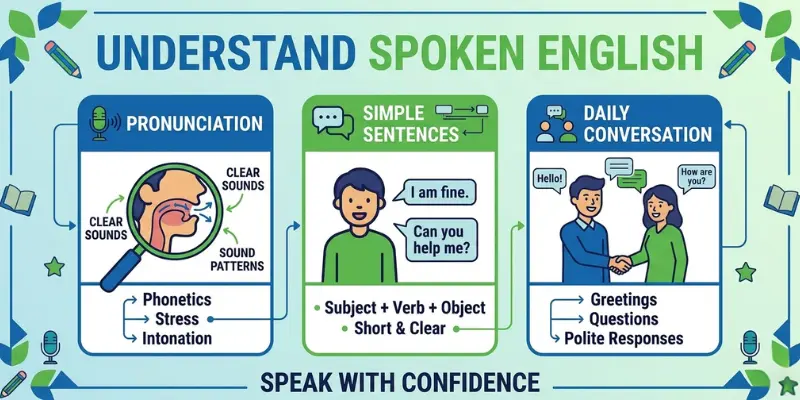
Spoken English is the simple and natural form of English that we use in real conversations. It helps you talk clearly, understand others, and express your ideas in daily life. It focuses on tone, pronunciation, and easy sentence patterns that make speaking smooth and confident.
It is different from written English, which follows strict rules. It is also distinct from Business English, which is a formal language, and General English, which encompasses all language skills. Spoken English focuses only on real, natural, easy communication.
You use Spoken English in many daily situations. You use it when greeting people, asking questions, giving instructions, and talking to friends or coworkers. Simple lines like “How are you?” or “Can you help me?” are common examples of Spoken English.
Why Spoken English Is Important?
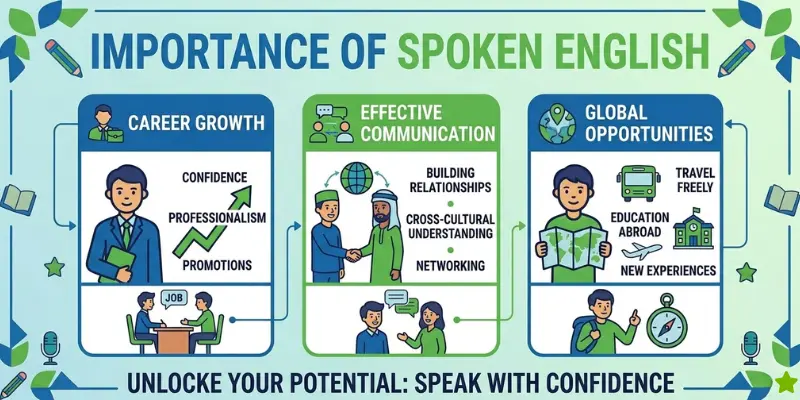
Spoken English helps you communicate in daily life. You use it to greet people, ask questions, and share simple ideas. Clear speech makes conversations easy at home, school, and work.
It also builds confidence. When you speak well, you feel more comfortable in social situations and enjoy engaging with others.
Strong Spoken English helps you in job interviews, presentations, meetings, and customer service. It also supports your travel needs, like asking for directions or booking a room. It also improves your online communication on calls and video meetings.
In education, it helps you take part in class discussions and oral exams. Teachers and students both rely on Spoken English for a clear understanding.
English is spoken in more than 50 countries and used as a second language in over 100 countries. This is why learning Spoken English is so important for everyday life and global communication.
Key Features of Spoken English
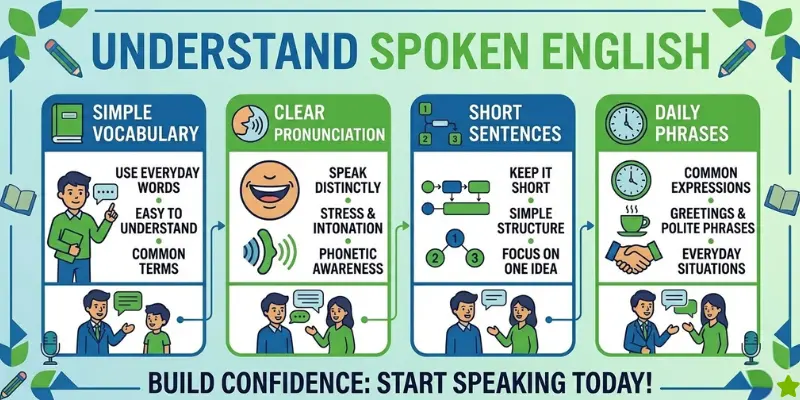
Spoken English has a few simple features that make communication easy and natural. These features help you express your ideas clearly and understand others in daily life.
Simple, Everyday Vocabulary
Spoken English uses common words that people use in real life. This makes conversations easy for both speakers and listeners.
Examples: help, need, visit, call, plan, buy.
Clear Pronunciation
Pronunciation is how you say a word. Clear pronunciation helps people understand you without repeating yourself. Even small sound changes can create new meanings.
Example: “ship” vs “sheep.”
Simple Grammar Structure
Spoken English uses short and clear sentences. You focus on basic tenses like present, past, and future. Modal verbs such as can, could, may, and should help you sound polite in conversations.
Example: “Could you help me?”
Natural Phrases and Expressions
Spoken English includes friendly phrases that people use daily. These expressions help you start conversations and sound natural.
Greetings: “Hello, how are you?”
Requests: “Can you help me?”
Polite expressions: “Please,” “thank you,” “sorry.”
Small talk: “How is your day going?”
Common Challenges in Spoken English
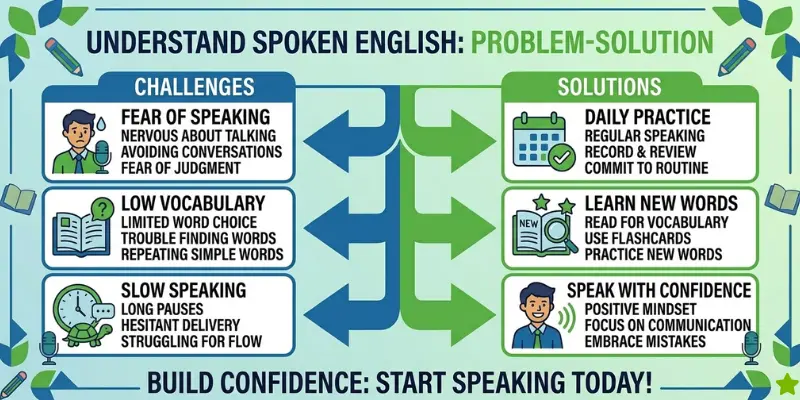
Learning to speak English with confidence can be exciting, but many learners face a few common problems. Here are the most common challenges and quick tips to fix them immediately.
Fear of speaking
Many learners feel shy or scared to speak in front of others. They worry about making mistakes or sounding wrong.
Quick Fix Tip: Start small. Speak a few lines daily with a friend or with yourself in the mirror. Use simple sentences. Celebrate small wins.
Low vocabulary
A limited vocabulary makes it hard to express ideas. You may know the grammar, but still struggle to say what you want.
Quick Fix Tip: Learn 3 to 5 new words a day. Use those words in short sentences. Listen to English videos to pick up natural spoken English words.
Translating from the native language
Many learners think in their own language first and then translate into English. This makes speech slow and unnatural.
Quick Fix Tip: Practice thinking in English. Start with easy things. For example, name objects around you or describe what you are doing.
Speaking too fast or too slow
Speaking very fast makes pronunciation unclear. Speaking very slowly breaks the flow of natural speech.
Quick Fix Tip: Find a steady pace. Record your voice. Listen and adjust your speed until your words sound clear and smooth.
Lack of real-life practice
Without real conversation practice, spoken English stays weak. You may understand English, but you cannot speak fluently.
Quick Fix Tip: Use English in daily life. Join online spoken English groups. Talk to classmates, friends, or practice with voice apps.
How to Improve Spoken English (Actionable Steps)
Improving your spoken English becomes easier when you follow clear, simple habits every day. Here are practical steps you can start right now.
1) Practice Speaking Daily
Make speaking a part of your routine. Talk with friends, family, or online partners who understand your learning journey. Even a few minutes of practice each day can build confidence and fluency.
Try discussing your day, your plan, or simple topics like food, school, or work.
2) Listen and Imitate (Shadowing Method)
Listen to native speakers and observe how they speak. This is called the shadowing method.
Use YouTube channels, English podcasts, and short movie clips. Listen to a line, pause, and repeat it. This helps you sound natural and improves your speaking rhythm.
3) Build Vocabulary Gradually
You don’t need hundreds of words in one day. Learn 5 to 10 useful phrases daily.
Focus on real-life vocabulary such as greetings, requests, daily routine words, and conversation phrases. Use each new phrase in a sentence so it becomes part of your active spoken English.
4) Improve Pronunciation
Good pronunciation makes your speech clear and easy to understand.
Record your voice while speaking. Listen to your recording and notice where you need to improve.
Try simple listen and repeat exercises. Start with short lines before moving to full sentences.
5) Join Spoken English Groups or Apps
Practice becomes more effective when you talk to real people. Join spoken English groups on social platforms or use mobile apps designed for speaking practice. These groups help you learn natural conversation skills and build confidence through regular practice.
6) Spoken English Course Online
Online spoken English courses give structured learning for beginners and advanced learners. They offer live classes, helpful apps, videos, and interactive sessions that guide you step-by-step.
These courses help improve fluency by giving regular speaking time, feedback from teachers, and real-life practice activities.
They are great for students, professionals, job seekers, and anyone who wants to speak English confidently in daily life or work settings.
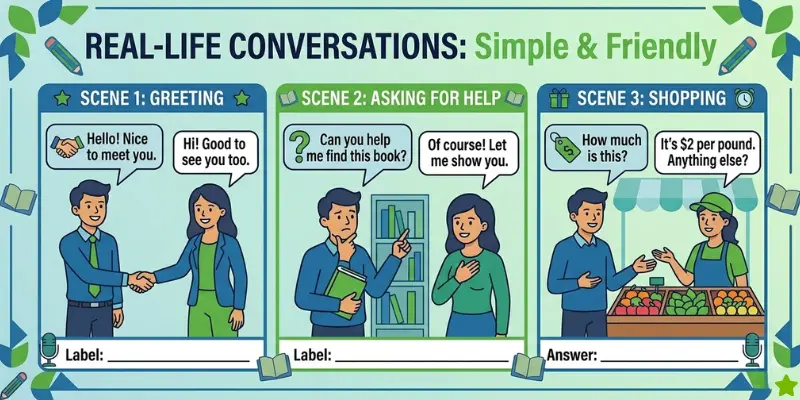
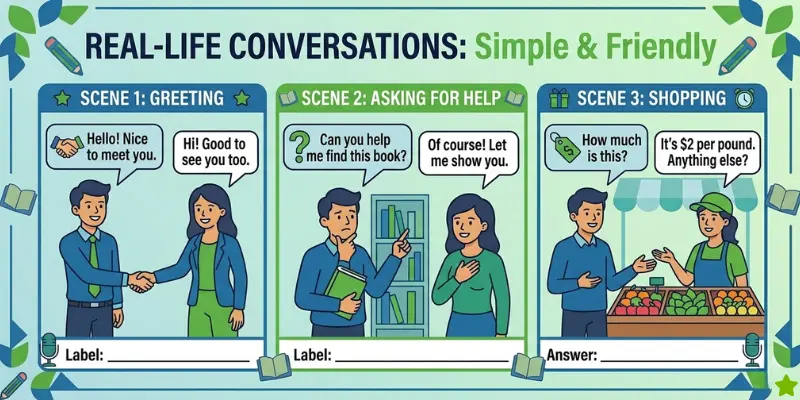
Spoken English Examples (Real-Life Conversations)
Real conversations help you understand how spoken English works in daily life. These simple dialogues reflect the way people actually speak. Each example is short, natural, and easy to practice on your own.
Daily Life Conversation
These are the conversations you use every day. They help you speak with friends, family, and people around you.
Greeting
A: Hello. How are you today?
B: I am good. Thank you. How are you?
Asking for help
A: Can you help me find this street?
B: Sure. It is right behind the park.
Simple discussion
A: What are your plans today?
B: I will study and then meet a friend.
Workplace Conversation
These examples help you speak clearly at work. They improve teamwork and help you sound professional.
Meeting
A: Can we start the meeting now?
B: Yes. Let us begin with today’s tasks.
Teamwork
A: Can you check this report for me?
B: Yes. I will look at it now.
Polite request
A: Could you send me the file?
B: Yes. I will send it in a minute.
Travel Conversation
These short dialogues help you speak confidently while travelling. Use them in hotels, shops, or when asking for directions.
Hotel
A: I need a room for one night.
B: Sure. Do you want a single or double room?
Asking for directions
A: Where is the bus station?
B: Go straight and turn left. It is near the bank.
Shopping
A: How much is this shirt?
B: It is ten dollars.
Interview Conversation
These examples guide you in job interviews. They help you introduce yourself and answer common questions.
Self-introduction
A: Tell me about yourself.
B: My name is Ali. I have studied computer science. I enjoy problem-solving and learning new skills.
Common question
A: Why do you want this job?
B: I want to grow and learn. This job fits my skills and career goals.
Practice these conversations to build confidence and speak more naturally in real life.
Common Mistakes in Spoken English
Many learners make small mistakes when speaking English. These mistakes can be easily fixed with practice. Knowing them helps you speak clearly and confidently.
Using Advanced Words Unnecessarily
Some learners try to use complex words in daily conversations. This can confuse listeners.
Incorrect: I am cognizant of the situation.
Correct: I know about the situation.
Incorrect Pronunciation
Mispronouncing words can change the meaning. Clear pronunciation is key in spoken English.
Incorrect: “Ship” pronounced as “sheep.”
Correct: “Ship” (short i sound).
Overthinking Grammar
Learners sometimes pause too long trying to be perfect. This makes conversations slow.
Incorrect: I am going to the market yesterday.
Correct: I went to the market yesterday.
Using Filler Words
Words like “umm,” “ah,” or “you know” are overused. They make you sound less confident.
Incorrect: I, umm, want to, ah, check the file.
Correct: I want to check the file.
Focus on these common mistakes and practice daily. Small improvements make your spoken English clearer and more natural.
Spoken English for Different Situations
Spoken English changes slightly depending on where you use it. Knowing how to communicate in different situations makes communication easier and more effective. Here’s how you can use it daily.
School or College
Students use English for class discussions, asking questions, and presenting ideas. Clear spoken English helps you participate and understand lessons more effectively.
Example: “Can you explain this topic again?”
Office
At work, spoken English is helpful for meetings, emails, and team discussions. Polite and clear language improves professionalism.
Example: “Could you please send me the report by today?”
Customer Service
Spoken English is crucial to helping customers and solving problems. Friendly and simple sentences make interactions smooth and easy.
Example: “How can I help you with your order today?”
Public Speaking
Good spoken English builds confidence on stage or in presentations. Simple words and clear pronunciation keep your audience engaged.
Example: “Today, I will talk about simple ways to improve English.”
Online Communication
Video calls, chats, and virtual meetings need clear English. Using the right phrases helps others understand you quickly.
Example: “Can everyone see my screen?”
Using spoken English appropriately in these situations boosts confidence and ensures smooth communication every time.
Best Resources to Learn Spoken English
Learning spoken English is easier with the right tools. Using a mix of websites, apps, and practice platforms helps you improve fast. Here are some of the best options.
Websites
Websites provide lessons, exercises, and quizzes for daily practice. You can learn grammar, vocabulary, and conversation skills online.
Examples: BBC Learning English, Voice of America (VOA) Learning English.
YouTube Channels
Video lessons show pronunciation, intonation, and real conversations. Watching videos helps you learn naturally and remember information more effectively.
Examples: EnglishAddict with Mr Steve, Speak English With Vanessa.
Mobile Apps
Apps let you practice speaking, listening, and vocabulary at any time. Daily short exercises make learning consistent and fun.
Examples: Duolingo, Hello English, and Cambly.
English Podcasts
Listening to podcasts improves fluency and understanding of native speakers. Short episodes help you practice pronunciation and daily phrases.
Examples: The English We Speak, All Ears English Podcast.
Free Speaking Practice Platforms
These platforms allow you to speak with others online. You can join groups or pair with learners from around the world.
Examples: ConversationExchange, SpeakPal
Platforms Offering Spoken English Courses Online
Structured courses help beginners follow a step-by-step learning process. They cover pronunciation, conversation, and grammar.
Examples: Udemy, Coursera, edX.
Free vs Paid Online Spoken English Classes
Free classes are good for basic learning and casual practice. Paid courses offer structured lessons, personal feedback, and certificates. Choose based on your learning goals and budget.
Using these resources regularly will boost your confidence, improve fluency, and help you speak English clearly in real-life situations.
English Language Spoken Countries
English is widely used around the world. Knowing where it is spoken helps learners understand its global importance and opportunities.
Countries in Which English Is Spoken
These countries have English as the native language. People use it in daily life, in schools, workplaces, and the media.
Examples:
- USA
- UK
- Canada
- Australia
- New Zealand
- Ireland
Countries Where English Is an Official or Second Language
Many countries use English as an official or widely spoken second language. It helps in business, education, and travel.
Examples:
- Pakistan
- Philippines
- UAE
- Nigeria
- Singapore
- South Africa
- India
Why Spoken English Matters in These Countries
Speaking English well opens doors to global jobs and career growth. It makes travel easier and helps learners join international education programs. Good spoken English also improves social interactions and workplace communication.
Conclusion
So, guys, in this article, we’ve covered Spoken English in detail. You learned why it is important, the common challenges learners face, and the simple solutions that make speaking easier. Spoken English helps you in daily life, work, travel, and education, and small practice steps can improve your fluency fast. Remember this: start with small daily conversations and your confidence will grow quicker than you expect.
Spoken English is how we speak in daily life, using clear and simple words. It helps you communicate confidently, connect with others, and handle situations at work, school, travel, or social events. Learning spoken English improves your fluency and understanding of everyday conversations.
Beginners should start with short sentences and easy words. Practice common greetings, questions, and phrases every day. Listening to English speakers and repeating sentences helps improve fluency.
Fluency depends on regular practice and exposure to the language. Through daily speaking, listening, and reading, most learners see improvement in a few months. Consistent practice accelerates learning and builds confidence.
Yes, strong spoken English allows you to answer questions clearly and confidently. It demonstrates professionalism and communication skills. Practising common interview questions improves your performance.
Some common phrases include: “How are you?”, “Can you help me?”, “Thank you,” and “I don’t understand. Please explain.” Using these everyday phrases makes conversations simple and effective.
It depends on your goals. British English is common in the UK and Europe, while American English is popular globally and in business. Pick one style and practice consistently to avoid confusion.
Talk to yourself or repeat sentences from videos, podcasts, or books. Record your voice to track improvement. Describe your daily routines or explain things aloud to practice natural conversation.
English is the main language in the USA, UK, Canada, Australia, New Zealand, and Ireland. These countries use English in schools, work, and daily life. Learning spoken English helps you to communicate easily in these regions and internationally.
Speak English every day using short and simple sentences. Listen to English speakers and repeat the lines to learn natural flow. Practice with friends or record your voice to build confidence.
Start with easy words and short phrases you can use in daily life. Listen to videos and read small texts to learn new speaking patterns. Practice speaking for a few minutes every day to see fast progress.
English is one of the most spoken languages in the world. It is the main or second language in many countries. Mandarin Chinese still has the highest number of native speakers, but English is used more globally.





- Be Respectful
- Stay Relevant
- Stay Positive
- True Feedback
- Encourage Discussion
- Avoid Spamming
- No Fake News
- Don't Copy-Paste
- No Personal Attacks
- Be Respectful
- Stay Relevant
- Stay Positive
- True Feedback
- Encourage Discussion
- Avoid Spamming
- No Fake News
- Don't Copy-Paste
- No Personal Attacks
