Why English Is a Global Language and Why It Still Matters
Published: 24 Sep 2026
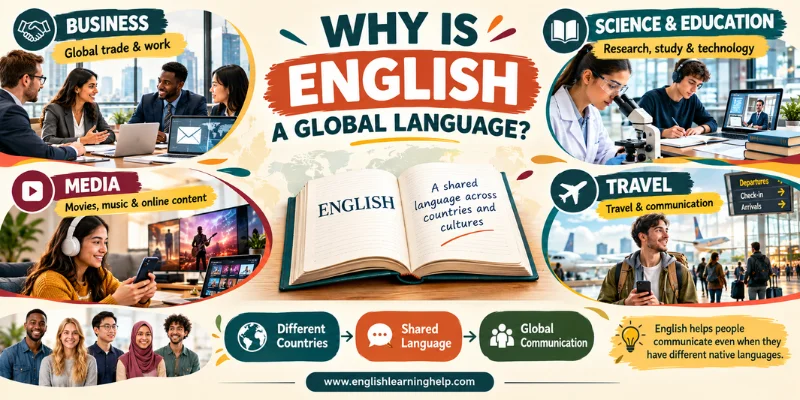
From Hollywood movies to tech blogs, English is everywhere. But have you ever wondered why English is a global language, while thousands of other languages exist? Why is it the first choice in science, business, and online learning?
Many learners struggle to understand how English became so important, and this article explains its rise, benefits, and role in global communication.
What Does “Global Language” Mean?
A global language is a language that many people worldwide can speak or understand. It is used to communicate across countries and cultures, and people do not need to share the same mother tongue to use one. This idea builds on a more basic question worth understanding first: what is the English language at its core, before looking at how far it has spread.
English is often called a lingua franca, a term for a common language used between speakers of different native languages. It earns this title because millions of people speak it as a second language, and it is widely recognized in international business, education, and media. Many online platforms and learning resources use English, making it easier for students and professionals to study and work internationally.
Example: Airports, hotels, and websites often use English so people from different countries can communicate easily.
History of English as a Global Language
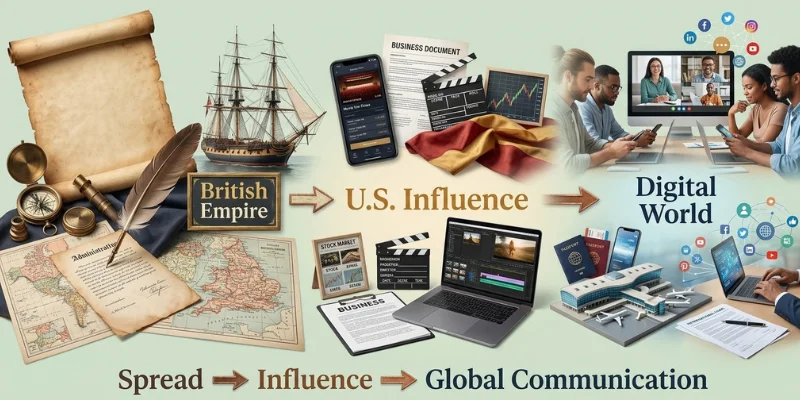
English became a global and dominant language through a mix of history, power, and culture.
British Empire and Colonization
The British Empire spread English to many parts of the world. Colonies in India, Australia, Africa, and other regions learned English for trade, administration, and education. This was the first step in making English widely known across continents.
Rise of the United States
Later, the United States emerged as a global power in business, science, and culture. Movies, music, and technology from the U.S. helped spread English even further, and people worldwide started using it to communicate in business, science, and everyday life.
Globalization and Trade
With the rise of international trade and globalization, English became the common language for business and travel. Companies and organizations in many countries adopted English as a shared means of communication with partners worldwide.
Example: Major English-speaking countries that influence global trade include the United States, the United Kingdom, Canada, Australia, and Ireland.
Understanding this history helps explain the main reasons why English is a global language today.
Why Is English a Global Language? Key Reasons
English did not become a global language by luck. Several major factors contributed to its spread across countries.
1. Economic Power
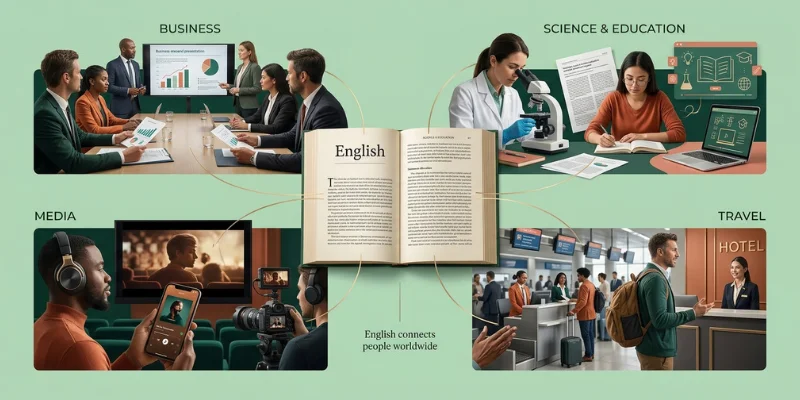
English grew because strong economies used it for business. Companies from various countries use English to discuss deals, share documents, and collaborate on projects. Example: Many international companies send emails, hold meetings, and sign agreements in English.
2. Science, Technology, and Education
Most scientific research is published in English. Many online courses, tech tutorials, and academic websites also use English, making it easier for people to learn for academic study and personal growth. Example: Most programming guides, research papers, and university resources are more easily accessible in English.
3. Media and Entertainment
Movies, music, and online content in English reach almost every part of the world. People learn English naturally because they enjoy this content. Example: Popular English songs or movies are watched and understood across many countries.
4. Travel and Communication
English helps people communicate when they visit new places. It is used in airports, hotels, and tourist spots, so travelers feel more confident when they know basic English.
This growing global reach connects closely to Business English, which is essentially the professional side of English’s role as the world’s shared working language.
Benefits of Knowing English
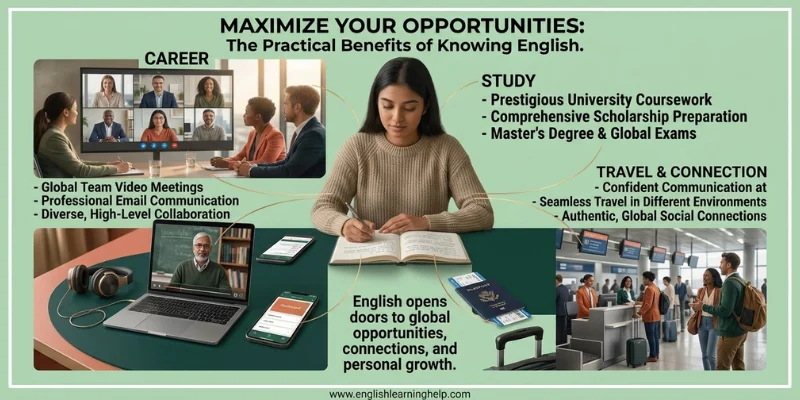
Knowing English can make life easier in many ways. It helps students, workers, and everyday learners connect with the world and access more opportunities.
For Students
English gives students access to a wide range of books, courses, and learning materials. Many exams and scholarships also require English, helping students study better and compete globally.
For Professionals
English opens doors to better international job opportunities and global teamwork. It helps people join international teams and talk with clients from other countries, so professionals can grow faster when they understand English.
For Everyone
English makes travel easier and more fun. It also helps people learn online, watch videos, and connect with others on social media, bringing people closer by making communication simple.
The importance of the English language goes well beyond these global-language benefits, shaping everyday opportunities for learners at every level.
Challenges of English as a Global Language
English helps many people, but it also brings challenges that affect learners, cultures, and communication. Understanding these challenges helps us deal with them fairly.
Language Inequality
Not everyone has the same chance to learn English. Some people have good schools and teachers, while others learn with very few resources. This gap means people with stronger English skills often receive more opportunities, which can feel unfair for talented learners with fewer resources.
Cultural Impact
When English becomes too dominant, local languages can lose space. Young people may use more English words and forget phrases from their own language, which can weaken cultural identity over time. Many families try to balance both, but it is not always easy.
Pronunciation and Variation
English has many accents and styles. Indian English sounds different from American English, and British English feels different from African English. These differences can confuse learners, and some people worry about their accent, even though accents are a normal part of language. The main goal is communication, not a single “correct” sound.
Example: A simple word like water can sound very different in India, the United States, or the United Kingdom. All versions are used in real life, and none of them is more “correct” than the others.
In years of teaching English learners from different countries, accent worry comes up constantly, almost always more than actual communication problems ever do. The learners who progress fastest are the ones who stop chasing a “perfect” accent and focus on being understood clearly instead.

Practical Tips for Learners
Learning English feels easier when you follow small, steady steps. You do not need perfect grammar or a fancy accent, just a clear plan and regular practice.
Focus on Common Vocabulary
Start with the words people use in daily life. These words help you speak with confidence in simple conversations, and they also make travel and online communication easier.
Practice Listening and Speaking Every Day
Even ten minutes can help. Listen to short videos, songs, or simple conversations, and try to repeat what you hear. It builds confidence and trains your ear to understand different voices.
Use English Online
Watch short English videos, use learning apps, and read captions and comments. These small moments add up and make a real difference.
Try Simple Speaking Activities
Talk to a friend, record your voice, or read a short text out loud. These small habits help you learn faster than reading grammar rules alone.
Future of English as a Global Language
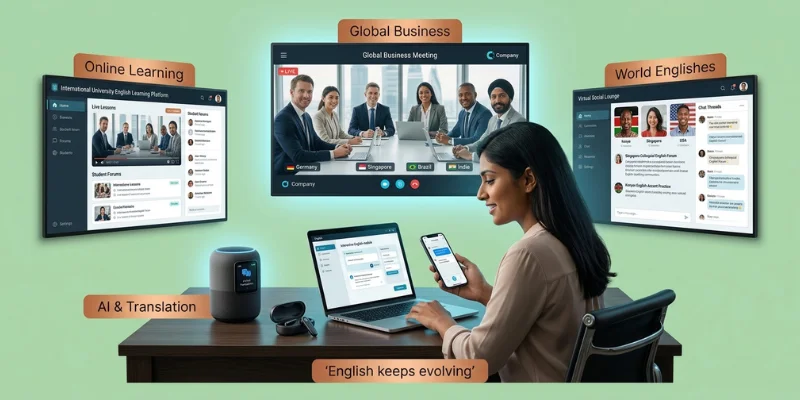
The future of English looks strong, but it will keep changing as the world changes. People everywhere still use it for work, travel, study, and online communication, so its global role will likely stay important.
English will remain a key language in international business, since companies from different countries often choose it to make teamwork easier. We also see English growing in travel and online spaces, as most airlines, hotels, and global websites prefer it because it helps visitors move around with less stress.
Technology will shape the future too. AI tools, translation apps, and language-learning platforms make English more accessible, supporting learners who do not have teachers or classes nearby. This ongoing shift is part of a bigger pattern covered in our guide on Modern English, which looks at how technology and global culture keep reshaping the language itself.
Another trend is the rise of World Englishes. People speak English in different ways around the world, and each country has its own style and accent. This shows that English is not owned by one place. It belongs to everyone who uses it.
With these changes, English will likely keep its global value, but it will feel more diverse and flexible, growing with its users as the world becomes even more connected.
Conclusion
Understanding why English is a global language comes down to one thing: it did not happen overnight. It grew through centuries of trade, colonization, technology, and culture, and that same momentum keeps it central to how the world communicates today.
Learning even basic English can open doors for study, work, and travel. Start with a small daily practice, like watching short English videos or learning a few new words each day. Growth happens one small, consistent step at a time.
English is used in many countries for study, work, and travel. People speak it as a first or second language, and it helps people communicate even when they come from different cultures and native tongues.
No. Basic phrases can help you ask questions and understand signs. Simple English makes travel easier and less stressful, even without full fluency.
English can feel hard at first, but it becomes easier with daily practice. Starting with simple words and short sentences and taking small steps helps you learn faster.
Both are fine for beginners. Choose whichever you hear more often in videos or learning apps. The most important thing is understanding and communicating clearly.
Companies often work with teams from different countries, so English helps them communicate effectively, keeping meetings and emails clear and supporting global business.
It is impossible to say for certain, but it is unlikely to lose its position soon. English remains deeply embedded in business, science, media, and education, and huge numbers of people continue to rely on it to connect globally.
People around the world speak English in their own way, and local accents and words influence how it sounds. This makes English rich and diverse rather than confusing.
Begin with simple words, short videos, and basic conversations. Use free apps or online lessons, since daily practice builds strong skills over time.

Standard English and Non-Standard English Explained in Simple Words So You Finally Get the Difference





- Be Respectful
- Stay Relevant
- Stay Positive
- True Feedback
- Encourage Discussion
- Avoid Spamming
- No Fake News
- Don't Copy-Paste
- No Personal Attacks
- Be Respectful
- Stay Relevant
- Stay Positive
- True Feedback
- Encourage Discussion
- Avoid Spamming
- No Fake News
- Don't Copy-Paste
- No Personal Attacks
