How to End a Conversation Politely: Easy Phrases & Examples
Published: 2 Oct 2026
Ending a conversation can sometimes feel harder than starting one.
You may know what you want to say, but you may still wonder, “How can I leave without sounding rude?”
The good news is that you do not need difficult English. A few simple phrases can help you end a conversation in a friendly and natural way.
In this guide, you will learn how to end a conversation politely with easy English phrases, real-life examples, short dialogues, and useful tips for different situations.
Why Is It Important to End a Conversation Politely?
Conversations naturally come to an end. You may need to go home, return to work, attend a class, answer a call, or simply take a break.
The way you end the conversation matters.
A sudden “Bye!” can sometimes sound too direct. A warm closing helps the other person understand that you enjoyed talking to them.
A polite ending can:
- Show respect for the other person.
- Help you leave without awkwardness.
- Create a good impression.
- Keep friendships and professional relationships positive.
- Make your English sound more natural.
The goal is simple: end the conversation clearly, but kindly.
How to End a Conversation Politely in English
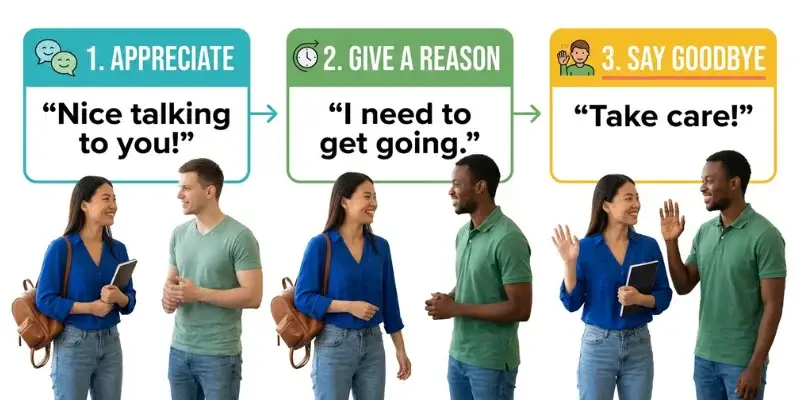
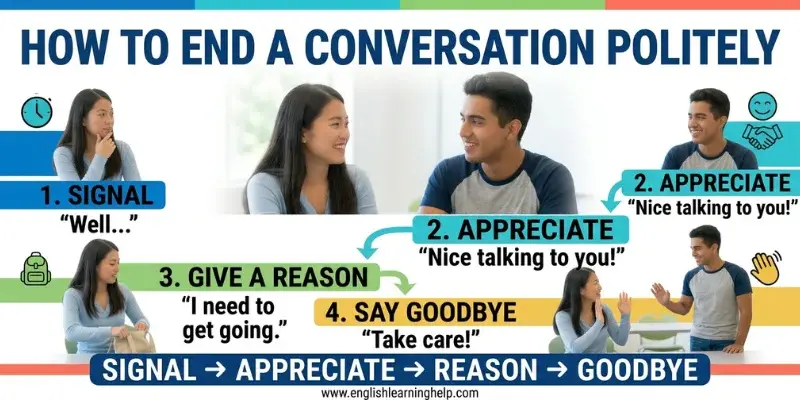
One of the easiest ways to end a conversation is to follow this simple formula:
Appreciate → Give a Reason → Say Goodbye
For example:
“It was really nice talking to you. I need to get going now. Take care!”
First, you show that you enjoyed the conversation. Then, you give a simple reason for leaving. Finally, you close with a friendly goodbye.
You do not always need all three steps. With close friends, a shorter ending may sound more natural.
For example:
“Great talking to you! See you tomorrow.”
The important thing is to make the ending friendly and clear.
If you are also learning how to start a conversation in English, you can see our guide to How to Start a Conversation in English. Learning how to start and end conversations gives you useful skills for the complete conversation.
20+ Polite Phrases to End a Conversation
Here are useful English phrases you can use when a conversation is coming to an end.
Simple Everyday Phrases
These phrases work well in many everyday situations:
- “It was nice talking to you.”
- “It was great talking to you.”
- “I should get going now.”
- “I need to get going.”
- “I’d better get going.”
- “I have to go now.”
- “See you later.”
- “Take care.”
- “Talk to you soon.”
- “See you next time.”
Friendly and Casual Phrases
Use these with friends, classmates, family members, or people you know well:
- “I’ve got to run.”
- “I’d better head home.”
- “I should get going.”
- “Let’s catch up soon.”
- “I’ll talk to you later.”
- “See you around.”
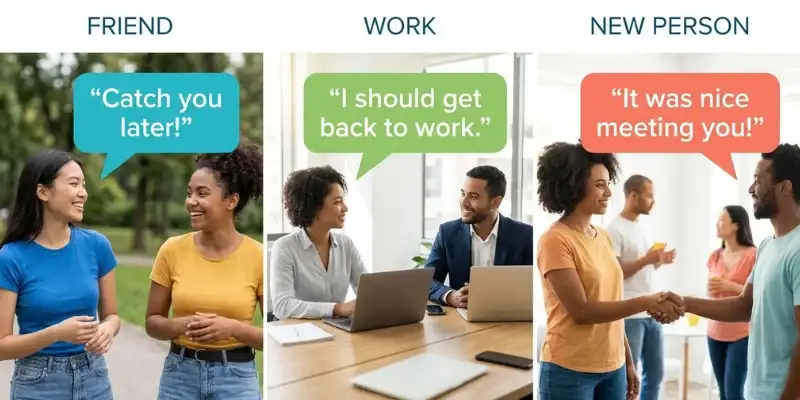
- “Catch you later.”
For example:
“This was fun, but I’ve got to run. Catch you later!”
More Polite Phrases
These phrases can help you sound respectful:
- “I don’t want to keep you any longer.”
- “I should let you get back to your work.”
- “It was a pleasure talking with you.”
- “Thank you for your time.”
- “I really enjoyed our conversation.”
- “I hope we can talk again soon.”
For example:
“Thank you for your time. It was a pleasure talking with you.”
How to End a Conversation Without Being Rude
You do not need a long excuse to leave a conversation.
A simple three-part ending usually works well.
1. Say Something Positive
Start with a friendly comment.
“It was really nice talking to you.”
Or:
“I enjoyed hearing about your trip.”
2. Give a Short Reason
Your reason can be simple.
“I need to get back to work.”
“I have a class starting soon.”
“I need to head home.”
You do not need to explain every detail.
3. Finish With a Goodbye
End clearly.
“See you later!”
“Take care!”
“Talk to you soon!”
Too Direct vs. More Polite
| Too Direct | More Polite |
|---|---|
| “I have to go. Bye.” | “I should get going now. It was nice talking to you.” |
| “I’m busy.” | “I need to get back to work.” |
| “Bye.” | “It was great talking to you. Take care!” |
| “I can’t talk.” | “I’m sorry, but I need to get going.” |
The more polite examples feel warmer because they give the other person a clear but friendly ending.
How to End a Conversation With Friends
You can use relaxed language with friends.
For example:
Ali: “Did you watch the football match?”
Hamza: “Yes! It was amazing.”
Ali: “I know! Anyway, I should get going. I’ll see you tomorrow.”
Hamza: “Sure. See you!”
You can also say:
- “I’ve got to go now.”
- “I should head home.”
- “Let’s talk later.”
- “I’ll see you tomorrow.”
- “Catch you later.”
- “Let’s catch up soon.”
With close friends, you usually do not need a formal explanation.
How to End a Conversation With Someone You Just Met
When you meet someone for the first time, a friendly ending can help you leave a good impression.
Try:
“It was really nice meeting you. I hope we can talk again soon.”
Or:
“It was great talking with you. Enjoy the rest of your evening!”
At a Party
“I’ve really enjoyed talking with you, but I’m going to say hello to a few other people. It was nice meeting you!”
At School or College
“It was nice talking to you. I have to get to my next class. See you later!”
At a Social Event
“I’ve enjoyed our conversation. I’m going to get some food now. Have a great evening!”
These endings give the other person a clear signal that the conversation is finished.
How to End a Conversation at Work
Work conversations often need a little more care.
You want to sound friendly, but you also need to respect the professional setting.
With a Coworker
“Thanks for chatting. I need to get back to work now.”
After a Meeting
“Thank you, everyone. I think that covers everything for today. Have a great afternoon.”
With a Manager or Teacher
“Thank you for your time. I’ll work on that and get back to you soon.”
At a Professional Event
“It was a pleasure speaking with you. I hope we can stay in touch.”
If you want to build stronger workplace communication skills, our Business English complete guide can help you learn useful language for professional situations.
How to End a Conversation on the Phone
Phone conversations can feel awkward because you cannot use body language to show that you are ready to leave.
A clear closing phrase helps.
Casual Phone Call
“I should let you go now. Talk to you later!”
When You Need to Leave Quickly
“I’m sorry, but I need to go now. I’ll call you later.”
Professional Phone Call
“Thank you for calling. I appreciate your time. Have a great day.”
Useful Phone Phrases
- “I should let you go.”
- “I’d better let you go.”
- “I need to get back to work.”
- “Thanks for calling.”
- “I’ll talk to you soon.”
- “I’ll call you later.”
- “It was good talking to you.”
“I’ll let you go” is a useful expression for ending a phone conversation politely. It means you do not want to keep the other person busy.
How to End a Group Conversation Politely
Ending a group conversation can be slightly different because several people are involved.
You can address everyone together:
“It was great talking with you all, but I need to head home. Have a great evening!”
Or:
“I’ve really enjoyed chatting with everyone. I need to get going now. See you next time!”
When You Want the Group to Continue
“I need to leave, but you guys can keep talking. See you later!”
This makes it clear that you are leaving the conversation, not asking everyone else to stop talking.
How to End an Online or Text Conversation
Ending a chat message can be simple.
With a Friend
“It was nice chatting with you! I have to go now. Talk to you later.”
When You Are Busy
“I need to get back to work now. I’ll message you later.”
In a Professional Chat
“Thanks for the update. I’ll check it and get back to you soon.”
Avoid sending only:
“Bye.”
A short friendly sentence can make the ending feel much more natural.
If you often write messages or emails in English, you can also work on your English writing skills.
How to Know When It Is Time to End a Conversation
Sometimes the hardest part is not finding the right phrase. It is knowing when to use it.
Here are some common signs.
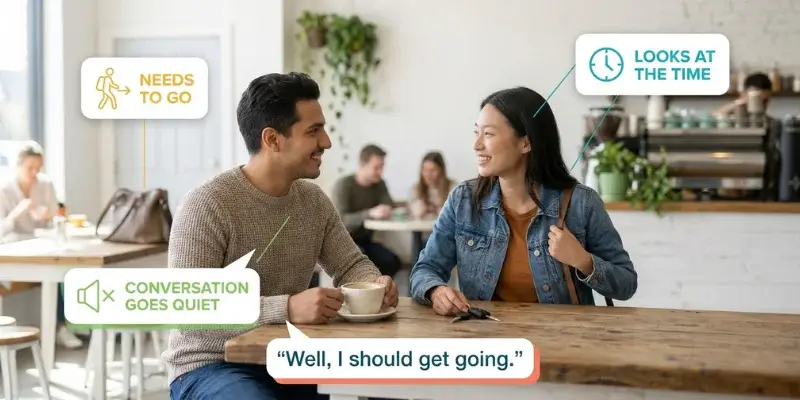
The Conversation Becomes Quiet
If both people stop asking questions and there are long pauses, the conversation may naturally be coming to an end.
You Start Repeating Things
If you have already discussed the main topic and there is nothing new to add, it may be a good time to finish.
Someone Needs to Leave
If the other person says they have a class, meeting, appointment, or other plan, you can help end the conversation naturally.
“Of course. It was great talking with you. See you soon!”
You Have Another Task
You can politely explain that you need to return to something.
“I’d love to keep chatting, but I need to finish my homework.”
You do not have to wait until the conversation becomes uncomfortable. A friendly ending is normal.
What to Say When You Don’t Know How to End a Conversation
If you suddenly forget what to say, use this easy sentence:
“It was nice talking to you, but I need to get going. Take care!”
You can change the middle part depending on your situation.
For example:
“It was nice talking to you, but I need to get back to work. Take care!”
Or:
“It was great talking to you, but I have a class now. See you later!”
This simple pattern can help beginners feel more confident.
How to Sound Natural When Ending a Conversation
Natural English is not only about grammar. It is also about choosing phrases that people commonly use in real conversations.
Use Transition Words
Words such as these can help you move toward the ending:
- Well…
- So…
- Anyway…
- Alright…
- Okay…
For example:
“Well, I should get going now.”
“Anyway, it was great talking to you.”
“Alright, I’ll let you get back to work.”
Keep Your Reason Short
You do not need to give a long explanation.
Instead of:
“I have to go because I have to go home and then I have to eat and after that I have to…”
Simply say:
“I need to get home now.”
Short and clear sounds more natural.
Use a Friendly Tone
The same words can sound different depending on your voice.
Compare:
“I have to go.”
with:
“I have to go. It was really nice talking to you!”
The second sentence feels warmer because it shows appreciation.
For more help with everyday communication, explore our guide to English communication skills.
Formal vs. Informal Ways to End a Conversation
The best phrase depends on who you are talking to.
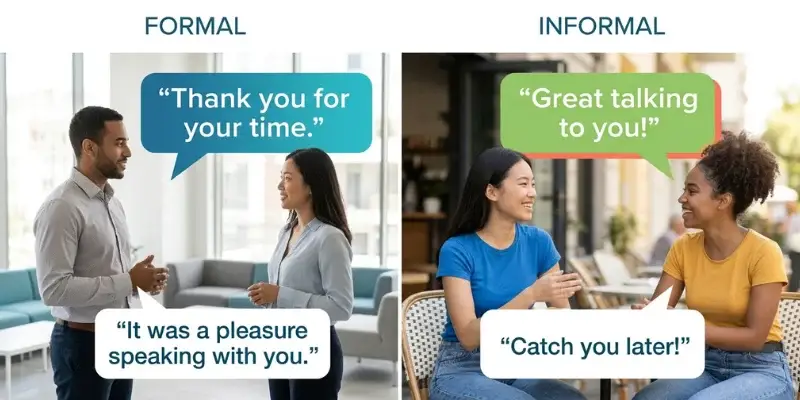
| Situation | Formal | Informal |
|---|---|---|
| Work | “It was a pleasure speaking with you.” | “Great talking to you!” |
| Friend | “I should get going now.” | “I’ve got to run.” |
| Phone | “Thank you for your time.” | “I’ll let you go.” |
| Meeting | “I look forward to speaking with you again.” | “Talk to you soon.” |
| New person | “It was nice meeting you.” | “Great meeting you!” |
Remember that formal English is not always better. Use the style that fits the situation.
You can learn more about choosing the right tone in our guide to Formal vs. Informal English.
Common Mistakes When Ending a Conversation
English learners often make a few simple mistakes.
1. Ending Too Suddenly
Saying:
“Bye.”
and immediately walking away can feel abrupt in some situations.
Try:
“It was nice talking to you. See you later!”
2. Giving Too Many Details
You do not need to explain every reason for leaving.
A short reason is enough.
“I need to get back to work.”
3. Sounding Angry or Impatient
Avoid phrases that make the other person feel unwanted.
Instead of:
“I don’t have time for this.”
Try:
“I’m sorry, but I need to get going.”
4. Using Very Formal English With Close Friends
You probably do not need to say:
“It has been a pleasure conversing with you.”
to your best friend.
Simply say:
“Great talking to you!”
5. Using Casual Language in a Professional Situation
Expressions such as “I’ve gotta run” may be fine with friends, but they may not fit every professional situation.
Choose your words based on the person and setting.
Real-Life English Conversation Examples
Let’s look at a few complete examples.
Example 1: With a Friend
Sara: “Are you going to the school event tomorrow?”
Mia: “Yes! I’m really excited.”
Sara: “Me too. Anyway, I need to finish my homework.”
Mia: “Okay. See you tomorrow!”
Sara: “See you!”
Example 2: With a Coworker
John: “Did you finish the report?”
David: “Almost. I just need to check one part.”
John: “Sounds good.”
David: “Thanks for your help. I should get back to it now.”
John: “Sure. Good luck!”
Example 3: With Someone You Just Met
Emma: “How do you know the host?”
Liam: “We work together.”
Emma: “Oh, nice! What kind of work do you do?”
Liam: “I’m a graphic designer.”
Emma: “That sounds interesting.”
Liam: “It was really nice meeting you. I’m going to get a drink. Enjoy the party!”
Emma: “You too!”
Example 4: On the Phone
A: “Thanks for helping me with my project.”
B: “No problem!”
A: “I should let you go now. I’ll talk to you tomorrow.”
B: “Sounds good. Take care!”
These examples show an important point: a polite ending usually feels like a natural final step, not a sudden stop.
A Simple Formula to Remember
If you are a beginner, remember:
A-R-G: Appreciate → Reason → Goodbye
1. Appreciate
“It was nice talking to you.”
2. Reason
“I need to get going now.”
3. Goodbye
“Take care!”
Put them together:
“It was nice talking to you. I need to get going now. Take care!”
You can change the words to match your situation.
For example:
“It was great talking to you. I need to get back to work. See you later!”
This formula gives you a simple structure when you do not know what to say.
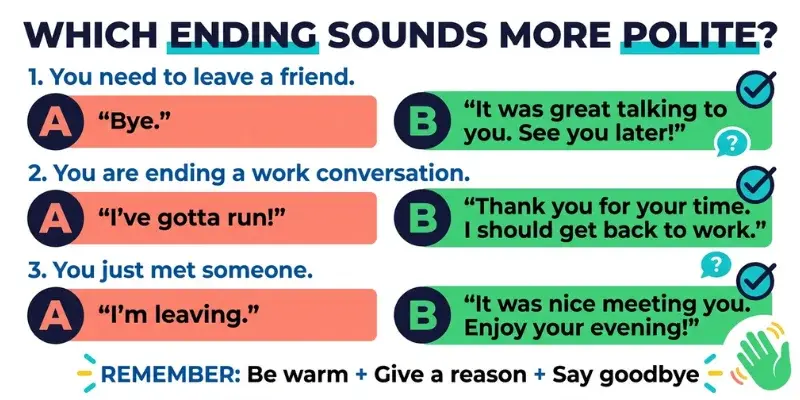
Practice: Choose the Best Conversation Ending
Try these questions.
1. You are talking to a friend, but you need to leave.
A. “Stop talking. Bye.”
B. “It was great talking to you, but I need to go. See you later.”
Answer: B
2. You are ending a professional conversation.
A. “I’ve gotta run!”
B. “Thank you for your time. It was a pleasure speaking with you.”
Answer: B
3. You are ending a phone call with a friend.
A. “I’ll let you go. Talk to you later!”
B. “End the call.”
Answer: A
4. You have just met someone at a party.
A. “It was nice meeting you. Enjoy the rest of the evening!”
B. “Bye.”
Answer: A
5. You need to return to your work.
A. “I need to get back to work now. It was nice talking to you.”
B. “You are wasting my time.”
Answer: A
The more you practice these situations, the easier it becomes to choose the right phrase naturally.
Improve Your English Conversation Skills
Knowing polite ending phrases is only one part of good communication.
You also need to know how to start conversations, ask questions, listen, respond, and keep a conversation going.
If you are still building your everyday speaking skills, practice with simple English sentences for daily use.
You can also improve your English vocabulary development so you have more words to use when conversations change direction.
For spoken practice, our spoken English guide can also help you build confidence with everyday English.
Conclusion
Knowing how to end a conversation politely can make your English sound more confident and natural. You do not need difficult words or long explanations.
Remember the simple Appreciate → Reason → Goodbye formula. Start with something positive, give a short reason when needed, and finish with a friendly phrase.
The best phrase depends on the situation. You may speak casually with a friend but use more polite language with a teacher, coworker, customer, or new person.
Start with one phrase today, such as “It was nice talking to you. I should get going now. Take care!” Once it feels easy, try another one.
With regular practice, ending conversations can become a natural part of your English communication.
FAQs
Use a friendly closing, give a short reason if needed, and say goodbye. For example, “It was nice talking to you, but I need to get going. Take care!”
You can say, “It was great talking to you. I should get going now. See you later!” This sounds friendly and works in many everyday situations.
Avoid ending the conversation suddenly when the situation calls for more warmth. Say something positive, give a simple reason, and finish with a friendly goodbye.
You can say, “I should get going,” “I need to get going,” “I’d better head off,” or “I should get back to work.” Choose the phrase based on the situation.
With friends, you can use casual phrases such as “I’ve got to run,” “I’ll talk to you later,” “See you tomorrow,” or “Catch you later.”
Try phrases such as “I should let you go,” “I’ll talk to you later,” or “Thanks for calling. Take care!” These phrases make the ending clear without sounding cold.
Use respectful phrases such as “Thank you for your time,” “It was a pleasure speaking with you,” or “I look forward to speaking with you again.”
Common phrases include “It was nice talking to you,” “Take care,” “See you later,” “Talk to you soon,” “Have a great day,” and “I hope we can talk again soon.”





- Be Respectful
- Stay Relevant
- Stay Positive
- True Feedback
- Encourage Discussion
- Avoid Spamming
- No Fake News
- Don't Copy-Paste
- No Personal Attacks
- Be Respectful
- Stay Relevant
- Stay Positive
- True Feedback
- Encourage Discussion
- Avoid Spamming
- No Fake News
- Don't Copy-Paste
- No Personal Attacks
