English Vocabulary Development: A Practical Guide for Learners
Published: 24 May 2026
Studies show that strong English vocabulary development helps learners speak, write, and understand English more effectively. Words shape how we express ideas and understand others. Without enough vocabulary, even good grammar can feel incomplete. That is why building vocabulary step by step is a key part of learning English.
Many learners understand grammar rules but still struggle to speak or write well. They pause often. They repeat the same simple words. This makes conversations hard and writing unclear. A limited word bank can lower confidence, too.
This guide will help you grow your vocabulary step-by-step. You will learn how to choose useful words. You will see simple examples. You will practice in real situations. By the end, you will feel more confident using English words naturally.
What Is English Vocabulary Development?
English vocabulary development means learning new English words and using them in the right way. It is not just about memorizing long word lists. It is about understanding meaning, usage, and context. Strong vocabulary helps you express ideas clearly in speaking and writing.
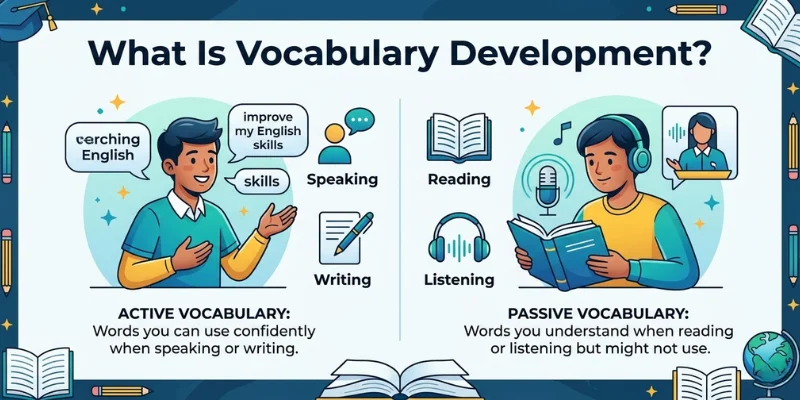
Many learners know many words but struggle to use them correctly. Knowing a word is one thing. Using it in the right sentence is another. For example, you may know the word improve, but you must know how to use it in a sentence like “I want to improve my English skills.”
Vocabulary has two types. Active vocabulary includes words you use while speaking and writing. Passive vocabulary includes words you understand while reading or listening. For example, you may understand the word analyze when reading a book, but you may not use it in daily speech. English vocabulary development helps move words from passive to active use.
Vocabulary development is important for everyone. Students need it for exams and assignments. ESL learners need it for daily communication. Professionals need it for emails, meetings, and reports. Building a strong vocabulary makes English easier and more confident for all learners.
Why English Vocabulary Development Is Important
English vocabulary development helps you speak English more fluently. When you know the right words, you speak with ease and confidence. You do not stop to search for words.
A strong vocabulary improves writing and exam answers. It helps you explain ideas clearly in essays, emails, and tests.
Vocabulary also improves understanding. Reading and listening become easier when you know more words. This builds confidence in daily English use.
In real life, vocabulary makes a big difference. At work, the right words help you write clear emails. In class, they help you ask better questions. In daily life, they allow you to share thoughts without stress. English vocabulary development supports better communication at every step.
How to Improve English Vocabulary Effectively
Random memorization is ineffective for most learners. You may remember words today and forget them tomorrow. This makes learning slow and frustrating.
English vocabulary development works better with context. Learn words through sentences, stories, and real examples. When you see how a word is used, you remember it longer.
Repetition and daily use matter a lot. Use new words in speaking and writing. Say them out loud. Write short sentences. This turns passive vocabulary into active vocabulary.
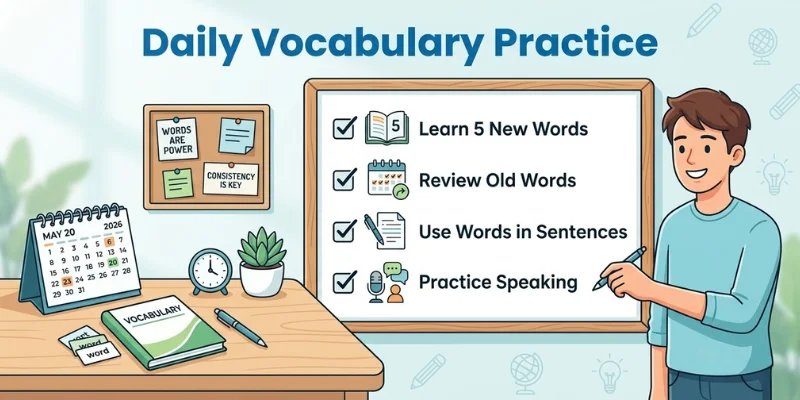
Set small and realistic daily goals. Learn five new words a day. Review old words before adding new ones. This steady practice improves vocabulary skills and builds confidence over time.
Proven English Vocabulary Building Techniques
The proven English vocabulary-building techniques are the following:
Learning Vocabulary Through Reading
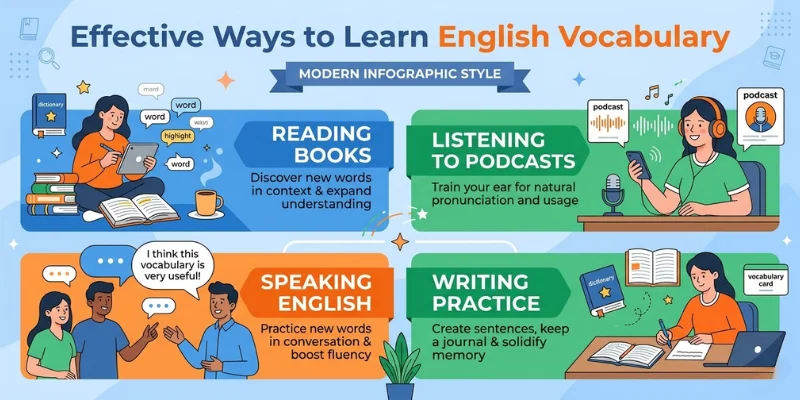
Reading simple English texts helps you meet new words naturally. Choose short stories, news for learners, or basic articles. Try to guess word meanings from the sentence. This builds strong word understanding. Keep a small vocabulary notebook. Write the word and one simple example. Review it often.
Learning Vocabulary Through Listening
Listening improves vocabulary faster than memorizing lists. Hear words in real conversations, videos, and podcasts. Notice how people use the same words again and again. Repeat new words softly or aloud. This helps with pronunciation and memory.
Vocabulary Learning Through Speaking Practice
Use new words in daily conversations. Speak with friends, classmates, or even yourself. Do not fear mistakes. Mistakes help you learn faster. Practice with short and clear sentences. This turns new words into active vocabulary.
Vocabulary Learning Through Writing
Writing helps fix words in your mind. Write short paragraphs using new vocabulary. Focus on clear meaning, not long sentences. Check your writing and fix the errors. This improves vocabulary for writing skills and builds confidence step-by-step.
Daily Vocabulary Practice for Long-Term Improvement
Daily vocabulary practice helps words stay in your memory. When you learn a little every day, your brain works better with new English words. This habit builds strong English vocabulary development over time.
Learn only five to ten new words a day. This number feels easy and realistic. Read the words in a sentence. Say them aloud. Use them in short sentences of your own.
Revision is just as important as learning. Go back to old words every few days. Use them in speaking or writing. This keeps words fresh in your mind.
Many learners know words but do not use them. These are passive words. To make their vocabulary active, speak and write with them. Ask simple questions. Write short notes. This turns knowledge into real English skills.
Vocabulary Development for Different Learner Levels
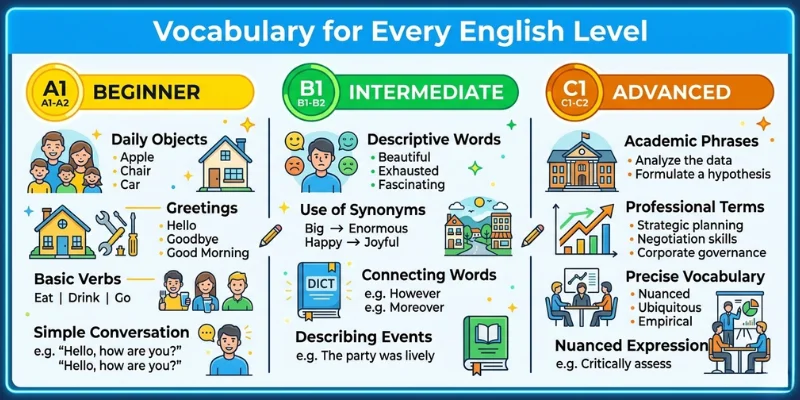
Learning English vocabulary works best when it matches your level. Each stage needs a clear and simple focus. This approach supports strong English vocabulary development for all learners.
English Vocabulary for Beginners
Beginners should start with basic English vocabulary. These are common words used in daily life. Focus on family, food, time, and actions.
Use short and clear sentences.
Example: I eat an apple. She goes to school.
These everyday English words help learners speak with confidence.
Vocabulary for Intermediate Learners
Intermediate learners need to expand word choices. Start learning synonyms and antonyms. This helps avoid repeating the same words.
Practice vocabulary for speaking and writing.
Example: happy and joyful. big and large.
Using varied words makes English sound more natural.
Advanced Vocabulary Used Carefully
Advanced learners can use academic and professional vocabulary. These words help in studies and work settings.
Do not overuse complex words. Simple language often works better.
Focus on clarity over difficulty. Clear English always creates a stronger impact.
Using New English Words Correctly
Learning new words is useful only when you use them the right way. Correct usage improves English vocabulary development and builds confidence.
Understand Word Meanings in Context
A word can change meaning based on the sentence. Always read the full sentence before using a new word.
Example: The word light means not heavy. It can also mean not dark.
Context helps you choose the right meaning every time.
Learn Common English Collocations
Some words naturally go together in English. These are called collocations.
Example: make a mistake, do homework, strong coffee.
Using correct word pairs makes your English sound natural.
Avoid Common Vocabulary Mistakes
Do not translate words directly from your native language. This often causes errors.
Avoid using new words without checking their meaning and usage.
Simple checks save you from common vocabulary mistakes.
Correct vs Incorrect Usage Examples
Correct: She made a decision today.
Incorrect: She did a decision today.
Correct: He is interested in learning English.
Incorrect: He is interested to learning English.
Practice using new words in short sentences. This habit improves accuracy and fluency.
Common Problems Learners Face in Vocabulary Development
Many learners work hard on English vocabulary development, but still face daily problems. These issues are common and easy to fix with the right approach.
Forgetting New Words Quickly
Learners often memorize words but forget them after a few days. This happens when words are not used in real sentences.
Simple solution: Use new words in speaking and writing on the same day. Review them after one week.
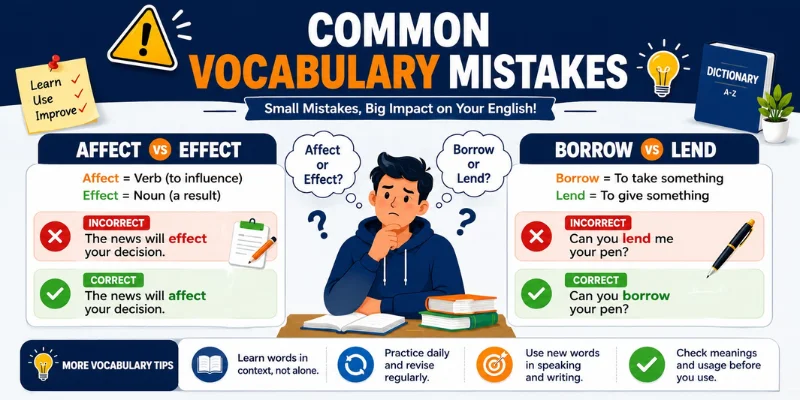
Confusing Similar Words
Some English words look or sound alike. This creates confusion.
Example: affect and effect, borrow and lend.
Simple solution: Learn one word at a time with a clear example.
Knowing Meanings but Not Usage
Many learners know the meaning but cannot use the word correctly. This affects speaking and writing.
Simple solution: Learn words with example sentences and common word pairs.
Easy Vocabulary Building Exercises
Simple practice helps English vocabulary development grow faster. These exercises are suitable for students and English learners at all levels.
Fill in the Blank Exercises
Use sentences with missing words. Choose the correct word from a short list.
Example: I ___ to school every day.
This activity improves word understanding and usage.
Match Words with Meanings
Write words in one column. Write meanings in another column. Match them correctly.
This helps learners remember new English vocabulary clearly.
Sentence Building Practice
Pick one new word. Write one or two short sentences with it.
Example: confident.
I feel confident in class.
This turns passive vocabulary into active vocabulary.
Short Daily Vocabulary Challenges
Learn five new words each day. Use them in speaking or writing. Review them before sleeping.
Small daily practice builds strong vocabulary skills over time.
Tips to Remember English Vocabulary Longer
Remembering new words is a common challenge in English vocabulary development. These simple tips help you keep words in your memory for a long time.
Use Smart Vocabulary Retention Techniques
Do not learn words alone. Learn them in short sentences. Connect each word with a real idea or image. This makes vocabulary learning easier and more natural.
Revise Words with Spaced Practice
Review the new English vocabulary after one day. Review again after three days. Then review after one week. This spaced practice helps words stay in your long-term memory.
Use New Words in Real Life
Say new words when you speak. Write them in short messages or notes. Using words in daily life turns passive vocabulary into active vocabulary.
Start Thinking in English
Try to think in English during simple tasks. Name objects around you. Describe actions in your mind. This habit improves vocabulary usage and recall.
English Vocabulary Development for Speaking and Writing
Strong English vocabulary development helps you speak clearly and write with confidence. The words you choose shape how others understand your message.
Vocabulary for Speaking English
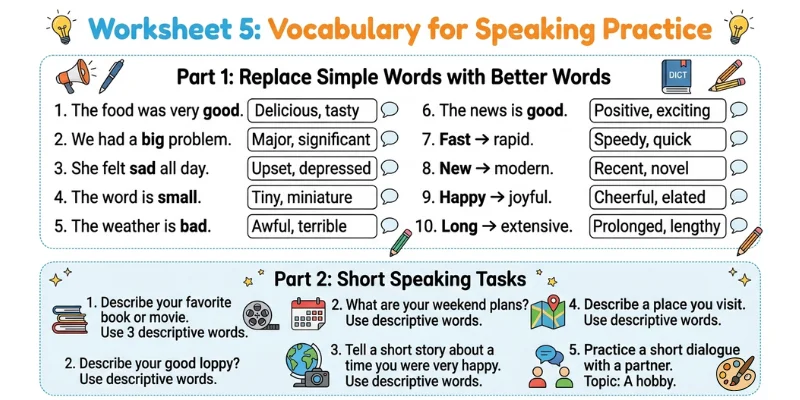
When you speak, use natural and common English words. These words sound clear and friendly. Avoid direct translation from your native language. It often causes mistakes. Think in English instead. Focus on clarity, not fancy words.
For example, say “I need help” instead of a complex phrase. Clear words make your spoken English strong.
Vocabulary for Writing Skills
Writing needs careful word choice. Choose words that match your purpose. Use simple words for messages and daily writing. Use formal vocabulary for exams, emails, and reports.
Understand the difference between formal and informal vocabulary. This improves your writing tone. Good word choice makes sentences clearer and more powerful.

Conclusion
So, guys, in this article, we’ve covered English Vocabulary Development in detail. We learned why vocabulary is essential for clear speaking, effective writing, and a deeper understanding. A rich word bank helps you express ideas with ease. It also builds confidence in daily English use.
Remember one key thing. Consistency matters more than speed. Do not rush to memorize long word lists. Use new English words in real sentences. Speak them. Write them. This habit turns passive words into active vocabulary.
If you want confident English, start small and stay regular. Begin today. Learn and use a few new English words every day. Your vocabulary growth will follow naturally.
English vocabulary development means learning new words and using them correctly. It helps you speak, write, read, and understand English better in daily life.
Learn five to ten new English words a day. This pace is easy to manage and helps with long-term vocabulary growth.
Both matter. Vocabulary helps you share ideas. Grammar helps others understand you clearly. Strong English needs a balance of both.
Beginners should read simple English texts and listen to daily conversations. Use new words in short sentences. Practice every day.
Use new words while speaking and writing. Revise old words often. Short daily practice builds a strong English vocabulary over time.

Words to Avoid in Writing: The Complete Guide to Clear, Confident, and Effective English





- Be Respectful
- Stay Relevant
- Stay Positive
- True Feedback
- Encourage Discussion
- Avoid Spamming
- No Fake News
- Don't Copy-Paste
- No Personal Attacks
- Be Respectful
- Stay Relevant
- Stay Positive
- True Feedback
- Encourage Discussion
- Avoid Spamming
- No Fake News
- Don't Copy-Paste
- No Personal Attacks
