The English Language Explained: Types, History, and Global Power
Published: 1 Jun 2026
Did you know that over 1.5 billion people speak English today? It’s the most common language for study, work, and communication worldwide. But what is the English language really? It’s more than just words or grammar; it’s a global tool that helps people connect, share ideas, and learn from each other.
Think about your favorite blogger who writes in English. Their words reach people from different countries because English enables them to share ideas worldwide.
Start by reading one short English paragraph every day. It’s a simple way to build comfort with new words and sentence styles.
So, now that we’ve set the stage, let’s explore together and see what the English language really means in everyday life.
What Is the English Language?
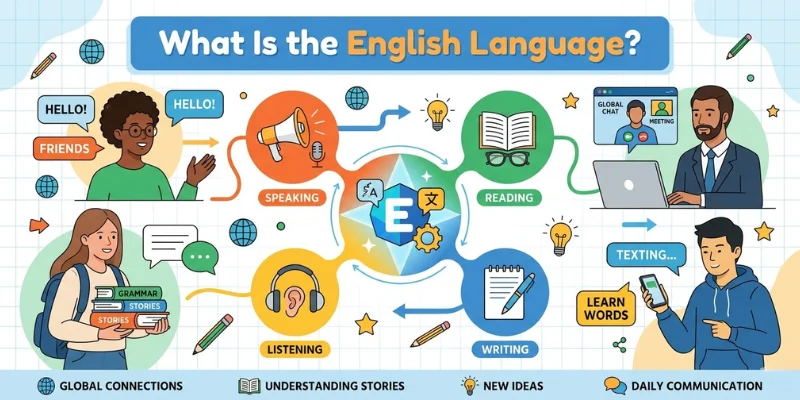
The English language is a way people communicate using words, sounds, and writing. It helps us share thoughts, stories, and ideas with others, no matter where we’re from. English began in England, but over time, it spread to almost every corner of the world. Today, it’s one of the main languages used for education, work, travel, and the internet.
Understanding what English really is helps you learn it easily. When you see it as more than grammar or words, you start to enjoy learning it. English changes all the time, and real people use it every day. That’s what makes it natural to learn and use.
Example
Think about YouTube creators who make videos in English. Their words reach millions of people worldwide. English connects them with viewers from Asia, Europe, and America.
Try This: When you watch or read something in English, say one sentence aloud. It helps you understand how the language sounds and feels, just as native speakers do.
A Short History of the English Language
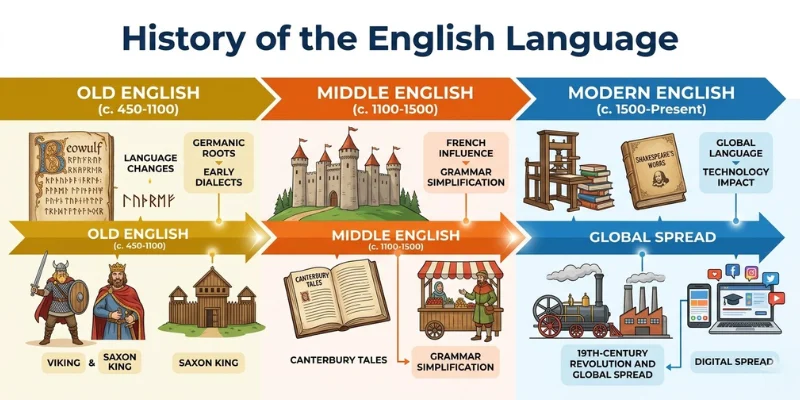
English didn’t just appear one day. It began in England many years ago and kept changing as people from other places brought their own words. First came Old English. It sounded nothing like what we speak now. Then, after the Norman invasion, French words began to mix in. Step by step, English got simpler and easier to learn. That’s the Modern English we use today.
When you know how English changed, those odd spellings and silent letters start to make sense. The language keeps growing, just like the people who speak it.
Example:
The word “night” used to be “niht” in Old English. It changed over time as English became easier and more global.
Try This: When you learn a new word, find out where it came from. It helps you remember it better and understand how English connects with other languages.
Why English Became a Global Language
English didn’t spread by accident. It spread because people carried it across countries through trade, travel, and education. A long time ago, the British Empire used English in schools and offices around the world. Later, movies, books, and the internet helped English spread even more. Now, people use English to learn, work, and talk with others online.
When you know how English became global, you start to see how powerful it is. It connects people and ideas everywhere.
Example:
Think about an English song that goes viral on YouTube. Millions of people from different countries sing along and understand it. That’s how English brings the world together.
Try This: Watch a short English video from another country. See how many words you catch. It’s a simple way to feel part of the English-speaking world.
Importance of Learning English Today
Learning English really helps in everyday life. It allows you to study more effectively, travel more easily, and talk to people around the world. Many jobs and businesses use English to communicate. The internet, apps, and social media are also mostly in English, so knowing it gives you access to more opportunities.
When you see why English matters, learning it feels useful. It is not just a subject at school. It is a skill that can help you in real life.
Example:
A student in Pakistan can watch a video from the United States and learn new skills. That helps them get better results faster.
Try This: Try a small habit every day. Read a short English article or watch a five-minute English video. It slowly builds your skill.
Types of English Around the World
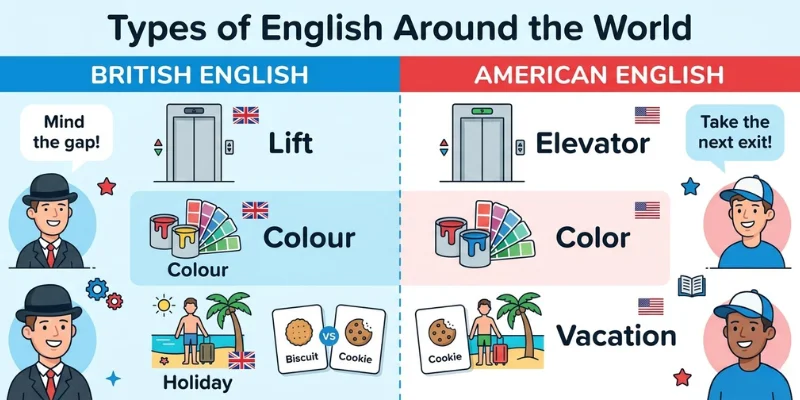
English is not the same everywhere. Different countries speak it slightly differently. The two most common types are British English and American English. They have small differences in spelling, words, and pronunciation. Most of the time, people still understand each other.
Learning the types of English helps you avoid mistakes. It also makes reading and speaking easier when you know the differences.
Example:
In British English, people say “lift” for the elevator. In American English, it’s “elevator.” Both mean the same thing, but the word varies from country to country.
Try This: Pick one type of English to focus on at first. Notice or focus on one type at first. Watch how the words are spelled and used. It helps you learn faster and more clearly.
How to Improve English Skills
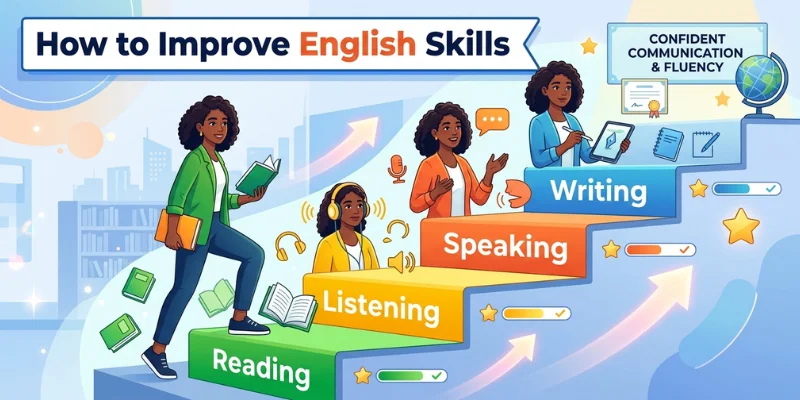
You get better at English by practicing every day. You can listen, speak, read, and write in English to get better. Each skill helps you use the language more naturally. Practicing a little every day is better than trying to learn everything at once.
When you focus on your skills, learning feels useful. It helps you feel confident when speaking, writing, or reading English in real life.
Example:
A student listens to English podcasts every morning. After a few weeks, they can understand conversations more easily.
Try This: Pick one skill to practice today. Listen to a short podcast, read a story, or write a few sentences. Small steps build strong English habits.
Fun Facts About English
English is full of surprises and little quirks that make it fun to learn. Some words have more than one meaning. Some letters are silent and don’t sound at all. Knowing these facts makes the language more interesting and helps you remember words better.
Fun facts make studying exciting. They show that English is not just about rules and grammar. It can be playful and creative too.
Example:
The word “set” has more than 400 meanings. You can use it in many ways in everyday conversation.
Try This: Learn one fun fact every day. Try using it in a sentence. It makes learning feel like a game.
Conclusion
So, learners, in this article, we’ve covered what is the English language in detail. I recommend practicing a little every day and using English in real-life situations. Watch out for overcomplicated sentences or using words you don’t fully understand. Be careful not to focus only on memorizing words; always try to understand and use them correctly.
Start today by reading a short article, writing a few sentences, or listening to a simple video in English. Keep practicing every day. I hope your English will get better step by step. Don’t stop exploring what the English language can offer; every small effort brings you closer to fluency and opens new opportunities.
The English language is a global language used for communication, education, and business. It began in England but is now spoken worldwide. It helps people share ideas and connect across countries.
The English language is important because it’s the main medium for global communication, technology, and education. Knowing English opens doors to better jobs, travel, and learning opportunities. It helps you connect with people from different cultures.
No one person created the English language. It developed over centuries from Old English, influenced by Latin, German, and French. People shaped it naturally through speech, writing, and cultural exchange.
English is spoken in more than 70 countries, including the U.S., the U.K., Canada, Australia, and India. It’s also used as a second language in many parts of the world. That’s why it’s often called the world’s common language.
English can be tricky at first because of its spelling and grammar rules. But it’s easier than many languages once you practice regularly. Listening, reading, and speaking daily help you improve fast.
The English language spread through trade, the British Empire, and later through movies, books, and the internet. Today, it’s the main language for business, travel, and technology. That’s why it’s known as a global language.
The two main types of English are British English and American English. They differ in spelling, pronunciation, and some words like “colour” (British) and “color” (American). Still, speakers understand each other easily.
Silent letters come from old spellings that never changed, even though pronunciation did. Words like “knight” and “honest” once sounded different in Old English. Learning their patterns helps with reading and writing.
Yes! You can learn English on your own through online lessons, videos, and books. The key is to practice daily and use English in real-life situations.
Practice listening, speaking, reading, and writing every day. Use short videos, songs, or stories in English to naturally build fluency. Small daily habits lead to big improvement over time.




- Be Respectful
- Stay Relevant
- Stay Positive
- True Feedback
- Encourage Discussion
- Avoid Spamming
- No Fake News
- Don't Copy-Paste
- No Personal Attacks
- Be Respectful
- Stay Relevant
- Stay Positive
- True Feedback
- Encourage Discussion
- Avoid Spamming
- No Fake News
- Don't Copy-Paste
- No Personal Attacks
