Why English Language Is Important: 9 Real Reasons That Change Your Life
Published: 22 Jul 2026
Think about the last time someone asked you, “Do you speak English?”
Maybe it was in a job interview. Maybe it was online. Maybe it was a moment where you wished your answer was yes.
That one question shows exactly why English matters and shows the importance of the English Language. It is not just a school subject. It is a skill that opens doors in your career, your education, your travels, and your daily life.
In this article, you will find out exactly why the importance of the English language is something no learner should ignore. And why starting today is better than waiting.
What Does the Importance of the English Language Actually Mean?
When people talk about the importance of English, they do not just mean passing an exam or memorizing grammar rules.
They mean real-life values.
They mean the ability to read, speak, and understand a language that connects you to millions of opportunities around the world.
A student who knows English can read science articles that are not available in their local language. A worker who speaks English can apply for jobs that pay more. A traveler who understands English can move through airports, hotels, and new cities without fear.
That is what importance really means here. Not theory. Real results.
Before we get into the reasons, it helps to understand what is the English language and where it actually comes from. That background makes everything below feel more meaningful.
1. English Is the Global Language of Communication
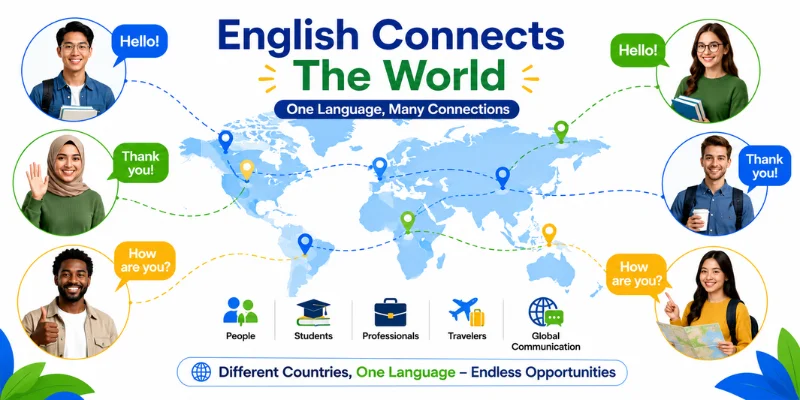
More than 1.5 billion people speak English around the world. It is used in schools, airports, offices, international meetings, and online spaces where people from completely different countries meet every day.
English works like a shared bridge. Two people who do not speak the same first language can still talk to each other in English.
A student from Pakistan and a student from Japan may share zero words in their native languages. But in English, they can have a full conversation, work on a project together, or even become friends.
That is the power of a global language. And English is at the center of it.
2. How Does English Help You in Education?
English plays a huge role in learning.
Most of the world’s top universities teach in English. Most research papers, science journals, and academic books are written in English. If you want access to the best knowledge in the world, English is the key that opens that door.
Online learning has made this even bigger. Platforms like Coursera, Khan Academy, and YouTube have millions of free lessons, almost all of them in English. A student sitting in Lahore or Karachi can learn from a professor at Harvard, completely free, just by understanding English.
Building a strong English vocabulary is one of the first steps toward making education work for you. The more words you know, the more you understand. And the faster you learn.

3. Why Do Most Jobs Require English Today?
Open any job listing in Pakistan, India, or anywhere in the world.
You will almost always see one requirement: “Good English communication skills.”
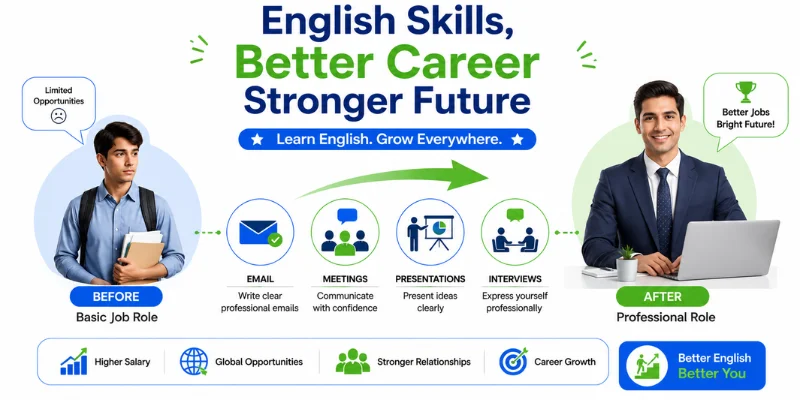
English is the language of business. Whether you work in technology, banking, medicine, tourism, customer service, or education, English gives you an edge. It helps you write better emails, give better presentations, and communicate with clients or colleagues from other countries.
A hotel worker in Islamabad who speaks English can serve international guests confidently and leave a strong impression. A software developer who writes clean English documentation gets noticed by global companies. A teacher who explains concepts clearly in English builds a stronger reputation.
English does not just help you get a job. It helps you grow in that job.
4. English Is the Language of the Internet
Here is a simple fact. Over 60 percent of all content on the internet is in English.
When you search for solutions to a problem, tutorials, news, or new skills, most of the best results come in English. If you cannot read or understand them, you miss out on a huge amount of useful information.
Knowing English means you can watch tutorials on YouTube, read tech blogs, join online communities, take free courses, and use tools that simply do not exist in other languages yet.
Good English writing skills also mean you can participate online by writing comments, emails, messages, and content that actually makes sense to a global audience.
5. English Connects You With People Around the World
English is not just a language. It is a connection.
On social media, in online games, in international classrooms, and in travel, English brings people together who would otherwise never be able to communicate.
You can join a discussion with someone from Brazil, reply to a comment from someone in Nigeria, or collaborate on a project with someone in Canada. All because you share one common language.
Learning simple English sentences for daily use is one of the fastest ways to start these real connections. You do not need perfect English. You need enough English to start the conversation.
6. English Builds Your Confidence
This is something people do not talk about enough.
When you speak English, even a little, something changes inside you. You feel more ready. More capable. More confident in situations that used to feel scary.
Walking into a job interview feels different when you can express yourself clearly. Traveling to a new city feels easier when you can ask for directions in English. Watching an English movie or reading an English article without needing a dictionary feels like a real achievement.
Confidence in English grows the same way any skill grows. One small step at a time. Read one paragraph today. Learn one new word. Speak one sentence out loud, even to yourself.
Those small steps add up faster than you think.

7. Is English Difficult to Learn?
Honestly, yes, it can feel hard at first.
The spelling does not always match the pronunciation. The grammar has rules that sometimes break their own rules. And there are so many words that mean almost the same thing.
But here is the truth. Every person who speaks English fluently today was once a complete beginner. Every single one of them felt confused at some point. The difference between those who learned it and those who did not is simple. They kept going.
Understanding things like since vs for or much vs many feels impossible at first. But with a little practice and the right explanation, these rules start to click. And once they click, they stay.
Start small. Stay consistent. The confusion gets smaller every single day.
8. Common Mistakes That Slow Down English Learners
Most people make the same few mistakes when learning English. Knowing them early saves you a lot of time.
Only studying grammar and never speaking. Grammar is important. But English is a communication skill. If you only study rules and never practice speaking, you will always feel stuck. Speak every day, even for one minute.
Trying to learn too many words at once. Learning 50 words in one day sounds productive. But most of them disappear from your memory within 48 hours. Learn 5 to 10 new words daily, use them in sentences, and they will actually stay.
Skipping practice when life gets busy. This is the most common one. Five minutes of English every day beats two hours once a week. Consistency matters more than intensity.
Avoid these three mistakes and your progress will feel much more real.
9. English Gives You a Stronger Future
Think five or ten years ahead.
The world is becoming more connected every year. More businesses are going global. More universities are offering online degrees. More opportunities are opening up for people who can communicate across borders.
In almost every one of those opportunities, English is the common thread.
Learning English today is not just about passing an exam or getting a certificate. It is an investment in your own future. Every lesson you study, every article you read, every conversation you practice. It all builds toward something bigger.
The earlier you start, the more that investment grows.
Conclusion
English will not change your life the moment you learn it. But it will change what is possible.
Every door that feels closed right now- a better job, a university abroad, a global network, a skill learned online. English is the key that opens it.
You do not need to be perfect. You need to start. And then keep going, one day at a time. The world speaks English. Now it is your turn.
English is important because it connects people across the world, opens doors in education and careers, and gives you access to most of the knowledge and opportunities available online and internationally.
English helps you communicate with people from different countries, understand online content, perform better at work, and feel more confident in everyday situations like travel, interviews, and social interactions.
In most professional fields today, like technology, business, education, and tourism, English is either required or gives you a clear advantage over other candidates.
The fastest way to improve is to practice every day. Read simple English content, learn new words in context, speak out loud even when alone, and focus on one skill at a time instead of trying to learn everything at once.
Start with simple everyday sentences. Focus on words and phrases you actually use in real life. Do not try to learn everything at once. Little daily progress adds up to big results over time.
Over 60 percent of internet content is in English because it became the global standard for communication in technology, business, and education. Most major platforms, tools, and resources were built using English first.






- Be Respectful
- Stay Relevant
- Stay Positive
- True Feedback
- Encourage Discussion
- Avoid Spamming
- No Fake News
- Don't Copy-Paste
- No Personal Attacks
- Be Respectful
- Stay Relevant
- Stay Positive
- True Feedback
- Encourage Discussion
- Avoid Spamming
- No Fake News
- Don't Copy-Paste
- No Personal Attacks
