Types of English Language: A Complete Guide to Its Varieties
Published: 25 Sep 2026

Many people do not realize that the types of English language used around the world can sound different, look different, and even follow different spelling rules. You may hear one style in movies, another in school, and a different one when talking to someone online.
These differences often confuse learners, but they all belong to the same language. When you understand the main types, English becomes easier to learn and much easier to use in real life.
What Do We Mean by “Types of English Language”?
When we talk about the types of the English language, we simply mean the different ways people speak, write, and pronounce English in various parts of the world. Every place adds its own style, accent, and choice of words. The core language stays the same, but the sound and spelling can change a little.
This matters because many learners get confused when they hear different versions of English online, in movies, or from teachers. Once you understand that these types are all valid forms of the same language, you feel more relaxed while learning, and you start to recognize patterns and choose the style that fits your needs.
Example: You might hear your friend from London say, “I’m knackered,” while your friend from New York says, “I’m exhausted.” The words sound different, but the meaning is the same.

Types, Varieties, or Dialects: What Is the Difference?
You will often see these three words used almost interchangeably, and in casual conversation, that is usually fine. But there is a small technical difference worth knowing.
A variety of English is a broad term covering any recognizable version of the language, including regional forms, formal and informal styles, and even professional or technical English. A dialect specifically refers to a regional or social version of a language with its own grammar patterns, vocabulary, and pronunciation, like British English or Indian English. Type is simply the most general, everyday word people use for either of these.
For everyday learning purposes, you do not need to worry too much about which label is “technically correct.” What matters is recognizing that English is not one fixed thing. It naturally adapts to the people and places that use it.

What Language Family Does English Belong To?
English belongs to the West Germanic branch of the Indo-European language family, which also includes German and Dutch. This is why English shares deep structural similarities with those languages, even though centuries of influence from Latin and French (especially after the Norman Conquest) gave English a huge amount of vocabulary that feels more similar to French or Italian.
This mixed background is part of why English has so much flexibility and such a large vocabulary, and it is also part of why it has spread so easily into so wide regional varieties worldwide. The full story of how this happened is covered in our guide on the history of the English language, from its Germanic roots to the global language it is today.
British English
British English is one of the most widely recognized types of English. People in the United Kingdom use it in schools, newspapers, and daily conversations.
Spelling
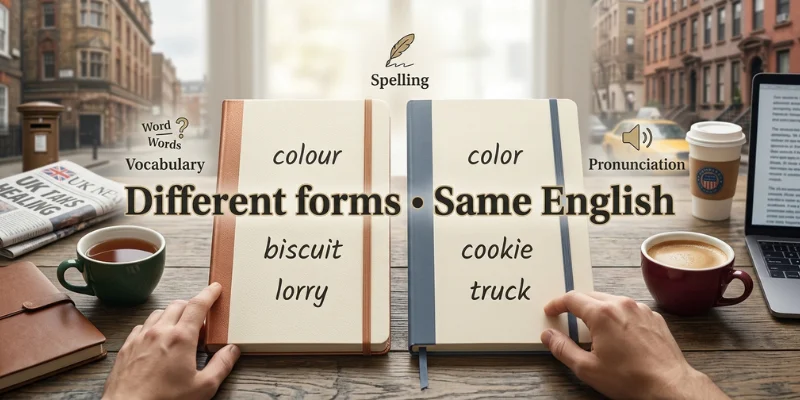
British English often uses spellings different from American English: colour instead of color, favourite instead of favorite, and centre instead of center.
Pronunciation
Some words sound different in British English. Tomato is pronounced /təˈmɑːtəʊ/ instead of /təˈmeɪtoʊ/, and schedule is /ˈʃedjuːl/ instead of /ˈskedʒuːl/. Herb is pronounced with the “h” sound, unlike in American English.
Vocabulary
British English uses words that may be unfamiliar elsewhere: biscuit means cookie, boot means car trunk, and lorry means truck.
American English
American English is the version used in the United States, heard constantly in movies, TV shows, and online content.
Spelling
American English uses color instead of colour, favorite instead of favourite, and center instead of centre.
Pronunciation
Tomato is pronounced /təˈmeɪtoʊ/ rather than /təˈmɑːtəʊ/, and schedule is /ˈskedʒuːl/ rather than /ˈʃedjuːl/.
Vocabulary
Cookie means biscuit, trunk means car boot, and truck means lorry.
Australian English
Australian English is the variety spoken in Australia, with its own sound, spelling habits, and a fun mix of local words. People speak with a relaxed tone, and the rhythm feels easy to follow in conversations and videos.
Spelling
Australian English stays close to British English: colour, favourite, and organise.
Pronunciation
The sound is smooth and relaxed, with somewhat shorter vowels. Day can sound close to “die,” and mate is used warmly as a casual greeting.
Vocabulary
Arvo means afternoon, brekkie means breakfast, and thongs means flip-flops.
Canadian English
Canadian English blends British and American styles, so it feels familiar to many learners. It shows how English can mix different influences while staying clear and easy to understand.
Spelling
Canadian English mixes both styles: colour with a “u” like British English, but center like American English.
Pronunciation
The accent is close to American English but softer. Canadians slightly raise the vowel sound in words like about and house.
Vocabulary
Washroom instead of bathroom, and loonie for a one-dollar coin.
Indian English
Indian English is one of the most widely used varieties worldwide, heard across schools, offices, news channels, and daily conversations, with a warm and clear sound.
Spelling
Indian English usually follows British spelling: colour, honour, centre.
Pronunciation
The rhythm is steady and clear, with most speakers pronouncing each word fully.
Vocabulary
Words like prepone, cousin-brother, tiffin, and crore come from Indian languages and daily use.
African English
African English appears across many countries on the continent, each bringing its own sound and style, often blending English with local languages into a rich, lively form of communication.
Spelling
Mostly follows British English: colour, favourite, centre, with some local spellings for place names, foods, and greetings.
Pronunciation
Pronunciation varies by country but stays steady and clear, often shaped by patterns from local mother tongues.
Vocabulary
Words like nyama (meat), jollof (a rice dish), and ubuntu (kindness and community) blend in from local languages.
Irish English
Irish English has a warm, musical sound that grew from English mixed with Irish culture, giving even simple words a distinct personality.
Spelling
Follows British spelling in most cases: colour, organise, theatre.
Pronunciation
Clear and smooth, with a gentle rise and fall that makes speech sound musical.
Vocabulary
Grand means “fine,” and craic means “fun or a good time.”
Beyond these regional varieties, English also keeps evolving globally, a pattern covered in more depth in our guide on Modern English, which looks at how technology and culture continue shaping “World Englishes” today.
Purpose-Based Types of English
Beyond regional differences, English also changes based on the situation you are in, not just where you are from.
Formal English
Formal English appears in schools, offices, books, and official messages. It sounds clear and careful because every word matters, using full sentences, correct grammar, and a polite tone.
Pronunciation: Stays steady and clear, with speakers slowing down slightly and opening each word fully.
Spelling: Follows standard rules, avoiding short forms like don’t or can’t in favor of full forms.
Vocabulary: Uses simple but correct words, avoiding slang, with terms like therefore, however, and in addition helping ideas flow smoothly.
Informal English
Informal English is the style used in daily life with friends, family, or people you know well. It feels light and natural because of simple words and relaxed grammar.
Pronunciation: Softer and faster, often connecting words and dropping sounds, like “did you” turning into “didya.”
Spelling: Becomes loose in quick messages, with forms like “u,” “tho,” or “pls” showing up often online.
Vocabulary: Simple, everyday words like “cool,” “yeah,” “gonna,” and “wanna.”
Our guide on Standard English and Non-Standard English explores this formal-versus-informal divide in much more depth, covering the grammar rules behind each style in detail.

How Many Types of English Are There?
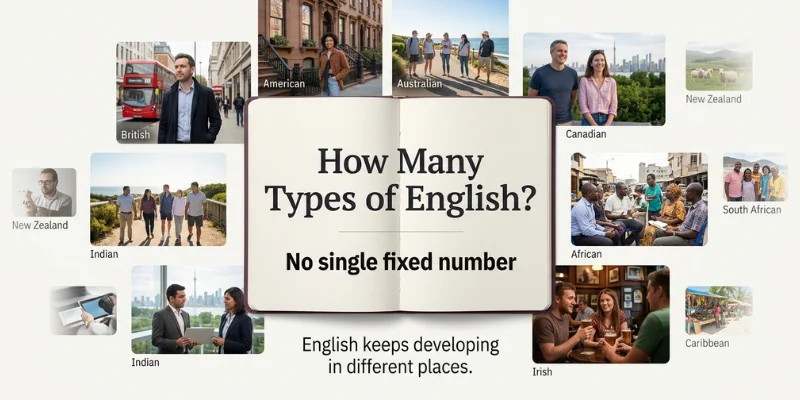
There is no single official number. Linguists generally agree on a handful of major regional varieties, the ones covered in this guide- but dozens of smaller regional and local dialects exist within countries too. New Zealand English, South African English, and many Caribbean varieties are just a few examples beyond the ones detailed here.
Rather than trying to memorize every variety, focus on the ones most relevant to your goals: the media you consume, the exams you take, or the people you communicate with most.
In years of teaching learners from different backgrounds, the students who progress fastest are the ones who pick one main variety to focus on first, usually British or American English, rather than trying to master every accent and spelling pattern at once.
Conclusion
Understanding the different types of the English language comes down to one simple idea: English is not one fixed thing. It is a living language that changes shape depending on where it is spoken and who is speaking it, while still staying recognizably the same language underneath.
Start with one type, like British or American English, and notice its unique words, spelling, and pronunciation. This simple habit helps you remember faster and speak or write with more confidence. Pick one type today and start practicing in your reading, writing, or conversations.
The main types include British English, American English, Canadian English, Australian English, Indian English, African English, and Irish English, along with purpose-based types like formal and informal English. Each has unique words, spelling, and pronunciation.
British and American English use different spellings, like “colour” versus “color.” They also have some different words and pronunciations. Both are correct, but you should stay consistent within one piece of writing.
There is no single fixed number. Major regional varieties are well documented, but many smaller local dialects exist within countries too, making the exact count impossible to pin down precisely.
English belongs to the West Germanic branch of the Indo-European language family, though centuries of French and Latin influence gave it a huge amount of borrowed vocabulary as well.
Informal English is used in daily conversations and texting. It includes slang, short forms, and casual words, and it is useful to understand for chatting or social media, though it is not appropriate for formal writing.
No. Focus on the type you use most in school, work, or daily life. Knowing a few key differences can help you avoid confusion without needing to master every variety.
English has spread to many countries over time. Different regions developed their own words, accents, and spellings, which made English rich but sometimes confusing for learners.
It is best used only in casual conversations. Avoid it in exams, reports, or professional emails, though understanding it still helps you communicate with friends and online communities.
Read books, watch videos, and listen to speakers of the type you want to learn. Try writing sentences using its spelling and words. Practicing a little at a time helps you improve naturally.





- Be Respectful
- Stay Relevant
- Stay Positive
- True Feedback
- Encourage Discussion
- Avoid Spamming
- No Fake News
- Don't Copy-Paste
- No Personal Attacks
- Be Respectful
- Stay Relevant
- Stay Positive
- True Feedback
- Encourage Discussion
- Avoid Spamming
- No Fake News
- Don't Copy-Paste
- No Personal Attacks
